
Samuel Jefroykin6 min read
We built a real business in 7 days with baget. Here is everything.
In late June we used our own product to take a one-sentence idea to a live business in seven days: Sakado, a French-language club where kids aged 11 to 14 learn to build real things with AI, one hour a week for a six-week season. The idea was typed on a Thursday. By the following Tuesday, the team had run five build cycles and there was a live storefront with an offer and a working payment link. This page is the full record: what the agents did, what took human hands, and the numbers as they stand, including the one most case studies hide, which is how much money it has made so far. The answer is zero, because the first season starts September 7, and we would rather show you the moment before the revenue screenshot than fake one.
Why write this down at all?
Because when we ask people in this audience what starting a business really involves, the most complete answer we have heard was this list, verbatim:
basic admin/set up, building/creating a product, finding product market fit, selling/growing a customer base.
No mystique, no garage myth, just four jobs. So instead of a launch story, this case study is an audit: for each of the four, what the baget team did, what a human did, and how long it took. If a tool claims to build businesses, this is the shape the receipts should take.
What did we build, and why that?
The idea, roughly as typed: a club for kids aged 11 to 14 to learn building real things with AI, games, apps, their own tools, in a small weekly group with a mentor, like soccer practice but what they train is building, sold by the season with a Demo Day at the end. We picked it because it is the kind of business our users pick: a service, delivered by a person, sold in a package, to a market we could reach ourselves.
What we did not do matters as much: no funding, no audience quietly reused, no team beyond the two of us and the agents. The starting conditions were the ones our users actually have: an idea, a browser, and hours found around everything else.
What did the team actually do, and how fast?
The record, from our own database. Idea typed June 25. On June 29 and 30 the agents ran five build cycles that produced the storefront, the offer copy, the season structure and two payment links priced at 249 euros, created June 29, four days after the idea. A sixth cycle ran a week later. Steering all of it took 23 messages back and forth with the manager over about ten days, in sessions that fit between school pickups and our actual jobs. Nobody stayed up wrestling a website.
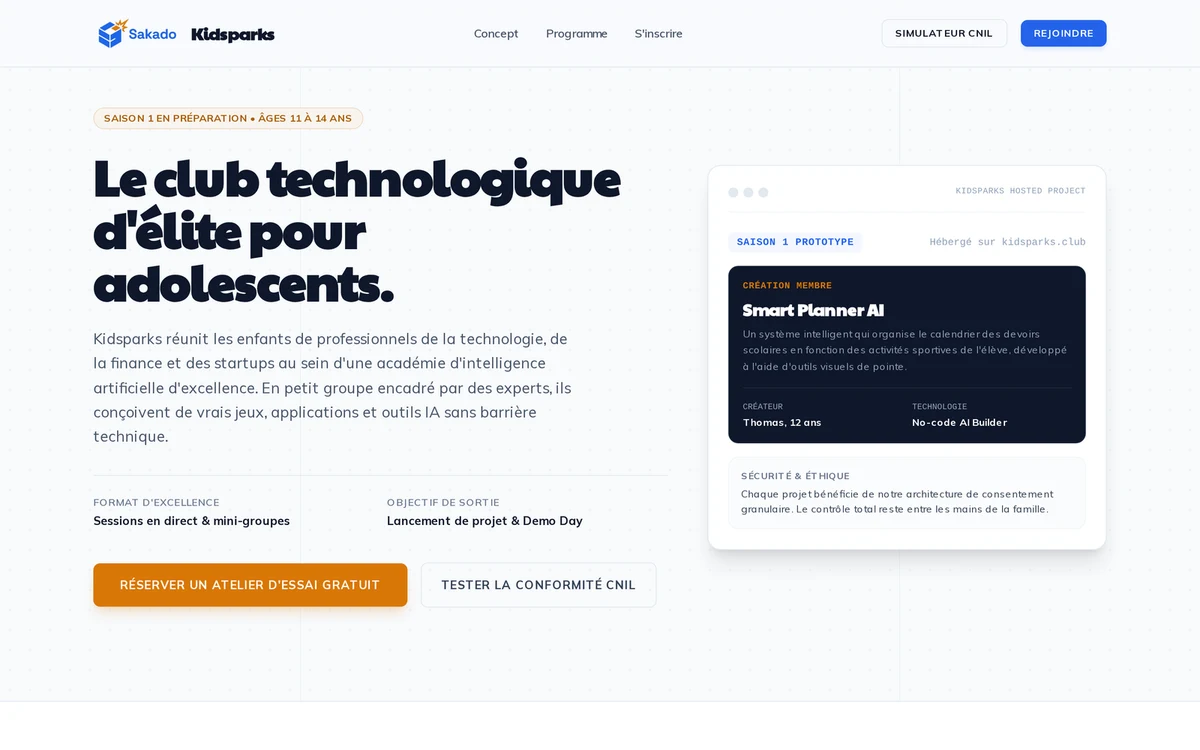
The agents' first build, from the immutable Vercel deployment of June 29, 2026.
So on the four-job list, the first two, the admin and the building, compressed into pieces of a single week. Worth saying plainly: the reviewing was real work. The agents produce; a human still chooses, corrects and occasionally throws out. Anyone who tells you the human part rounds to zero is selling something.
What still took human hands?
Every decision that makes it a business rather than a website. The record shows what those were, because each one changed something the agents had built. The agents named it Kidsparks; we renamed it Sakado and bought the domain, the one cash purchase of the project: nine dollars. The agents priced it at 249 euros; we repositioned it as a French-language program with small groups mentored by us, and priced the season at 350 euros. The agents shipped a checkout; we decided parents enrolling a child deserve a 15-minute call with a founder first, so the checkout became the second step, not the first. And everything a kids' product owes its families, the safety choices, the data care, the tone, was ours to decide, not the agents'.
That list is the honest ratio. The agents built the machine; the humans decided what the machine was for, who it serves, and what it costs. Those decisions took longer than the building.
So what are the numbers?
Spent so far: nine dollars, the domain name, and nothing else in cash. Building on baget was free to start, which is the same deal you would get. Priced: 350 euros per child for the six-week season, groups capped at 10, so a first season with one full group books 3,500 euros, and a first season with three kids books 1,050. Neither is a promise; one of them, or something else, will be what actually happens. Collected through the storefront as of this writing: zero, with enrollment open and the season starting September 7.
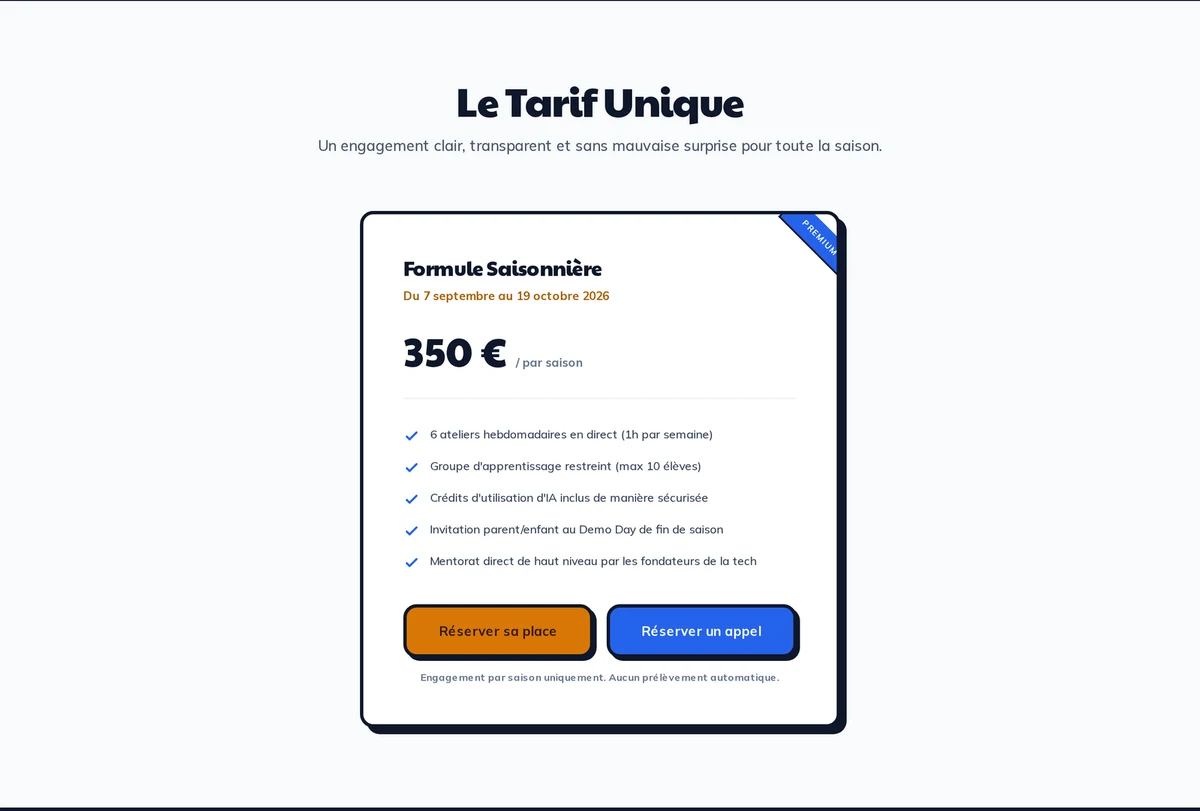
The price as it stands on the live site today.
We will publish the follow-up after Demo Day in October with the season's real P&L, filled or not.
What do seven days not get you?
The second half of the list. Finding product market fit and growing a customer base are not seven-day jobs and no tool makes them one, ours included. For Sakado that half looks like this: conversations with parents, a first season that has to be good enough that families re-enroll, and weeks of telling people it exists. One person in this audience, rebuilding after years out, said it to us in exactly these words:
starting your own business does not mean working less, it usually means working more.
What the seven days change is where your hours go. The weeks most first-time founders lose to the setup grind, the domain, the page builder, the checkout that will not connect, collapsed into batches we reviewed over coffee. The hours that remained went to the only parts that were ever going to be hard: deciding what to sell, and asking people to buy it.
Should you try the same experiment?
If you are in the deciding-from-the-sidelines phase, this is the cheapest way out of it we know: not a course, not another month of research, but the smallest real version of your own idea, live enough that someone could pay you. Starting is free, and the first afternoon tells you more than this case study can.
If you are weighing that against consulting or a fractional seat, we compared all three: three shapes of working for yourself
Describe your idea in one sentence, and watch what a team builds with it. It costs nothing to look.